
AI SHOWER
Interactive Installation / 2024
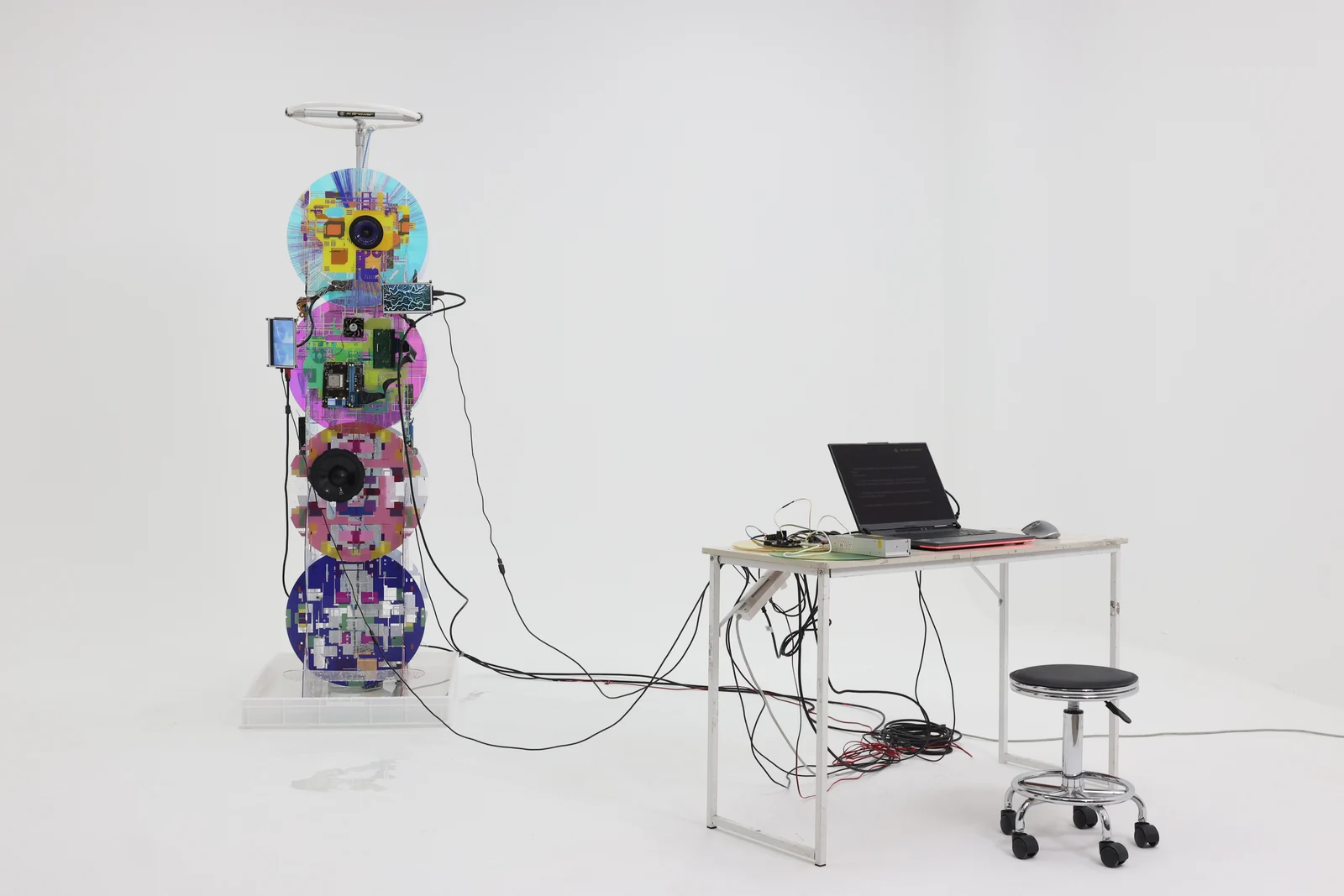
AI Shower turns the hidden water cost of artificial intelligence into a physical, visible event.
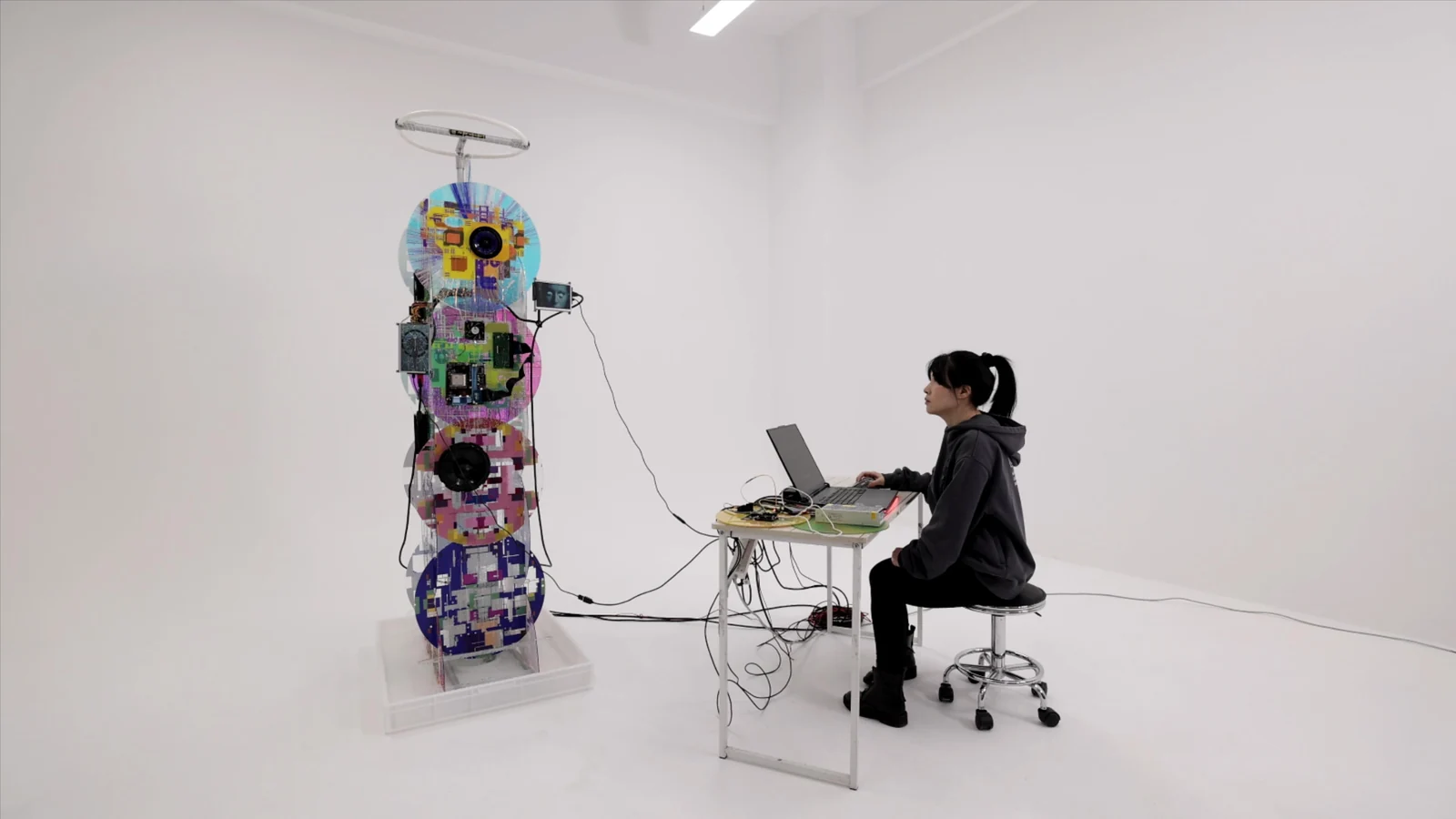
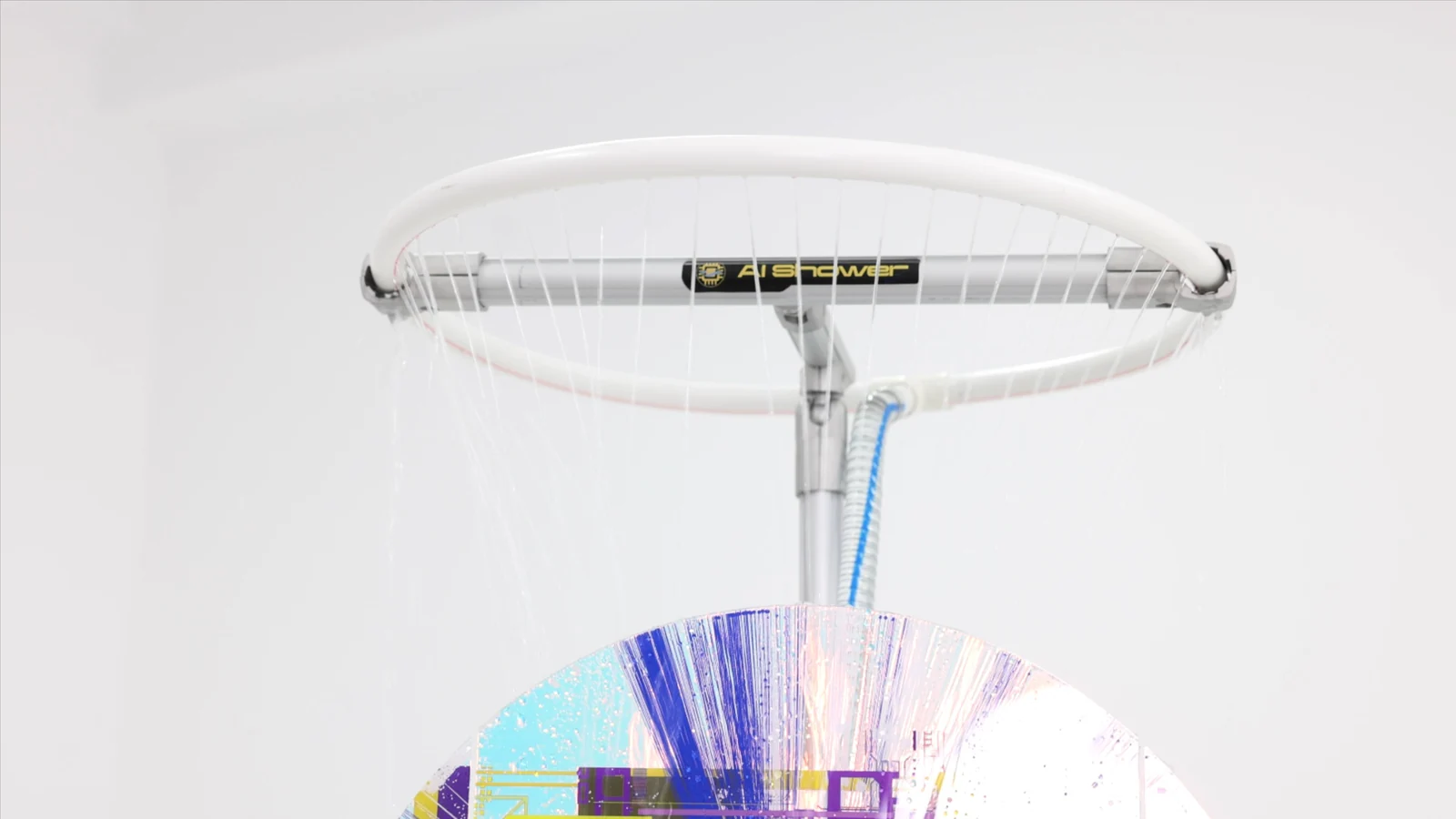
AI Shower explores the relationship between artificial intelligence, data-centre cooling, and water consumption. Visitors choose questions through a computer interface; Processing sends the selected input to an Arduino-controlled pump, and the installation responds by releasing water from a circular sprinkler above the tower. Different questions produce different flow rates, translating an invisible computational cost into a direct sensory experience. Built from layered UV-printed acrylic, computer components, two small displays and a physical water system, the work asks what technological progress demands from the natural world.
PROCESS / 01—05
PROCESS
The installation developed through repeated experiments in visual translation, physical prototyping and electronic control. Patterns derived from chips and silicon wafers were transformed into a modular acrylic structure, while Processing and Arduino connected the digital interface to the movement of water.
PROCESS 01
FROM CIRCUIT TO STRUCTURE
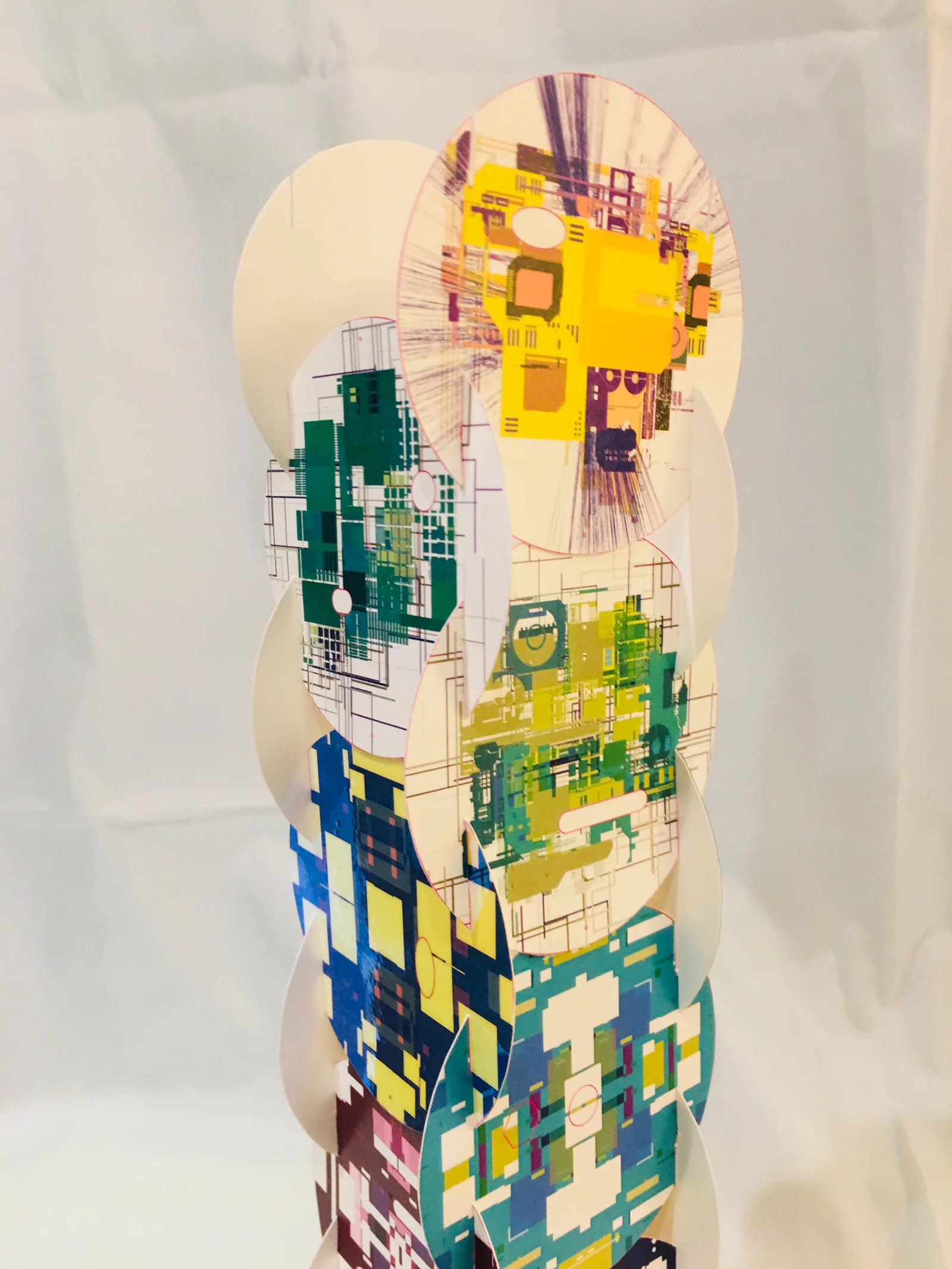
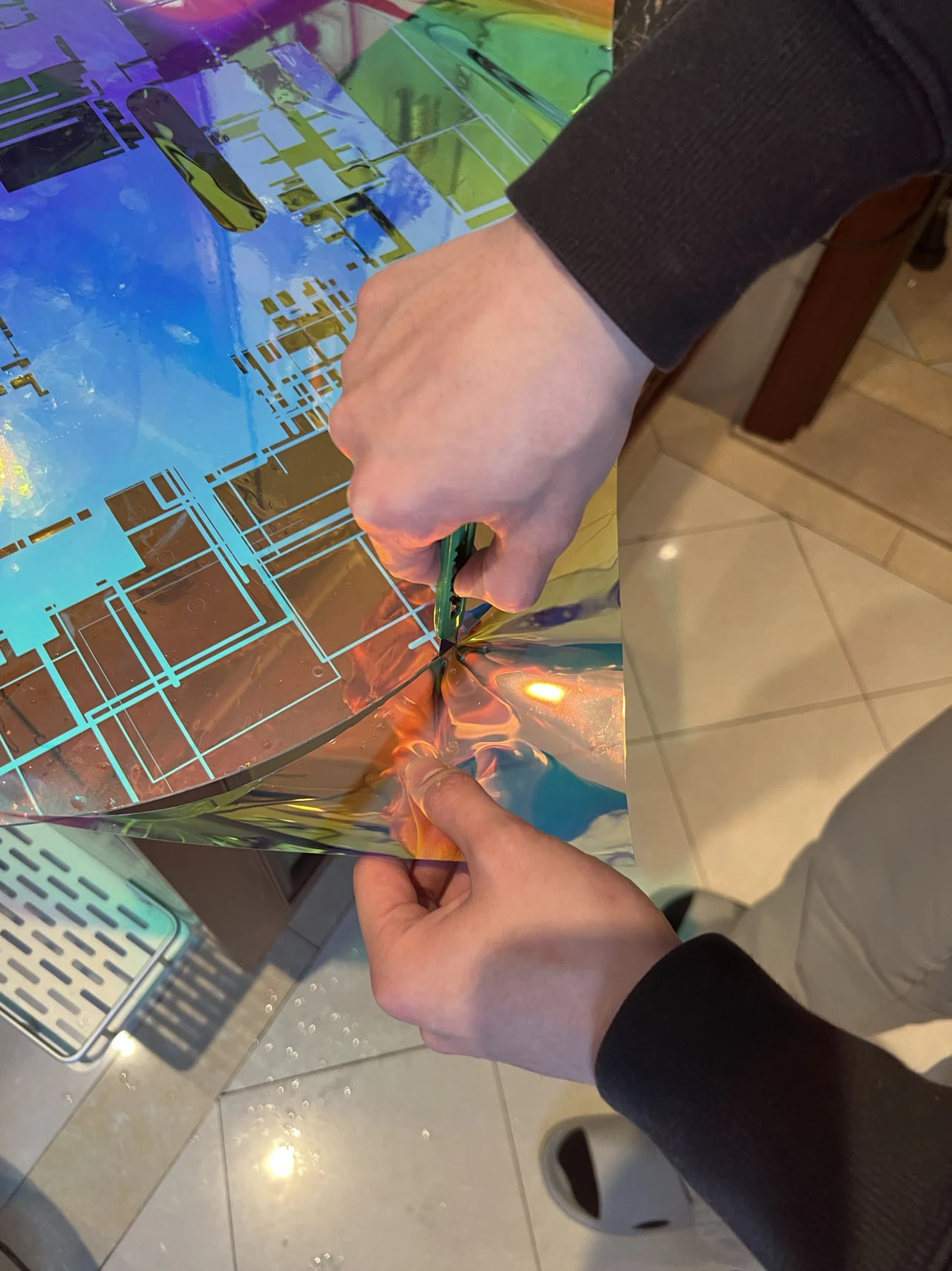
The visual language began with the geometry of processors, motherboards and silicon wafers. Their grids, layers and iridescent surfaces were abstracted into overlapping graphic systems, then UV printed onto transparent acrylic. As light passes through the assembled panels, the circuitry expands from a flat image into a layered spatial body.
PROCESS 02
PHYSICAL PROTOTYPE
Before producing the full acrylic installation, the graphic panels were printed on card and assembled as a scale prototype. Testing the layered forms at a smaller size revealed where colour, transparency and density became visually confusing, allowing the composition to be refined before fabrication.
PROCESS 03
FABRICATION
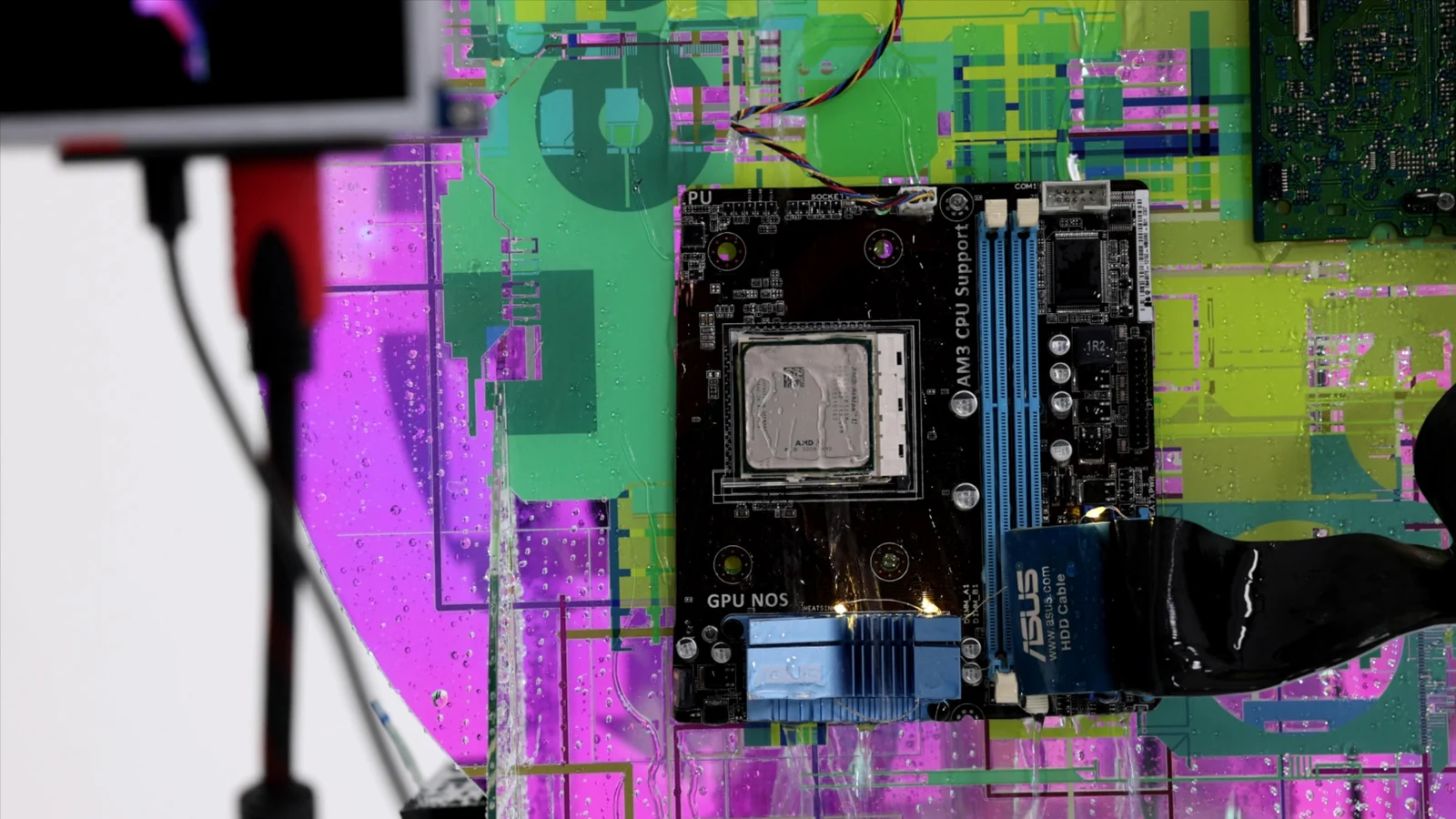
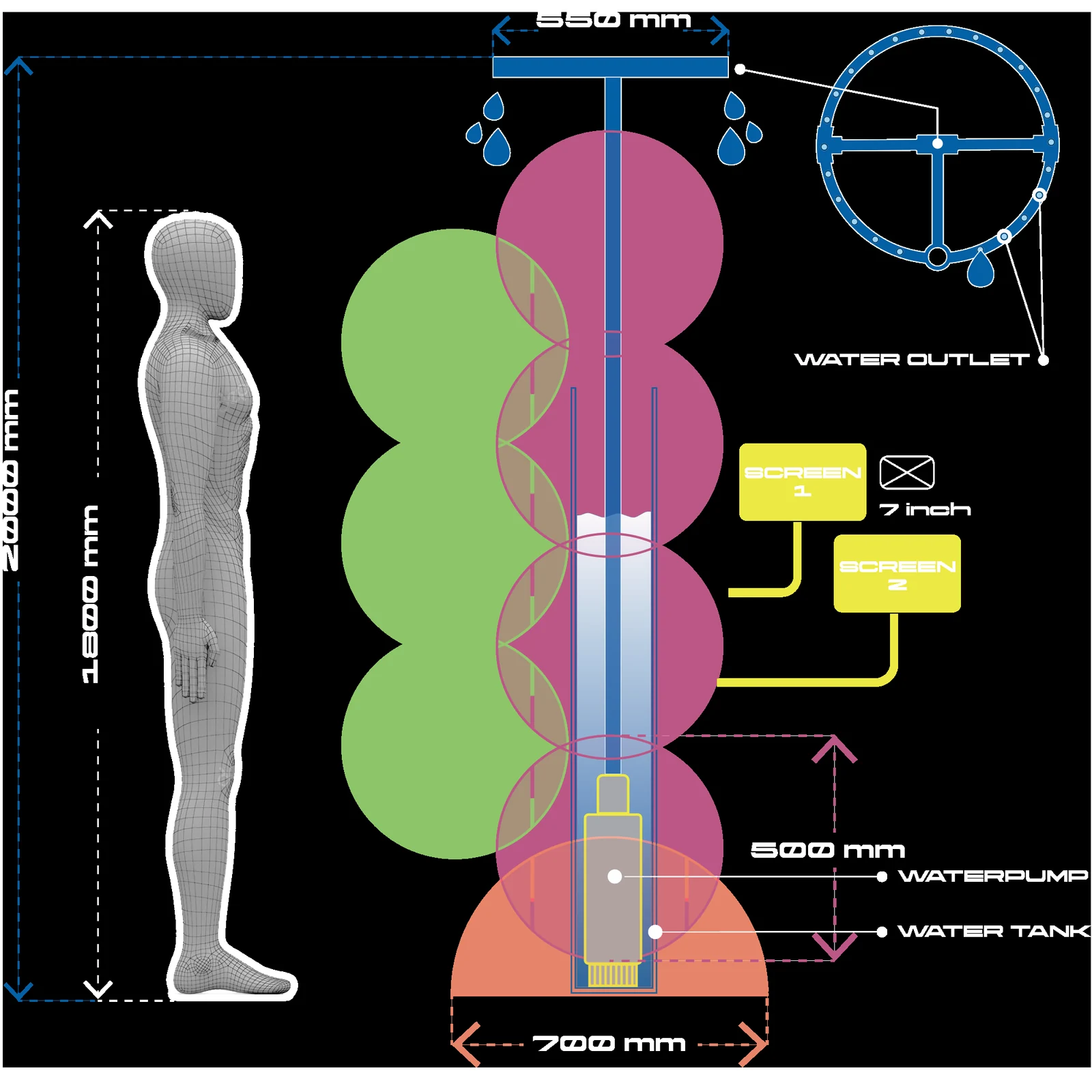
The final tower was assembled from interlocking UV-printed acrylic panels. Openings were cut for screens, computer parts, tubing and cables, allowing the electronic system to remain visible instead of being hidden behind a finished shell.
PROCESS 04
FROM INPUT TO WATER
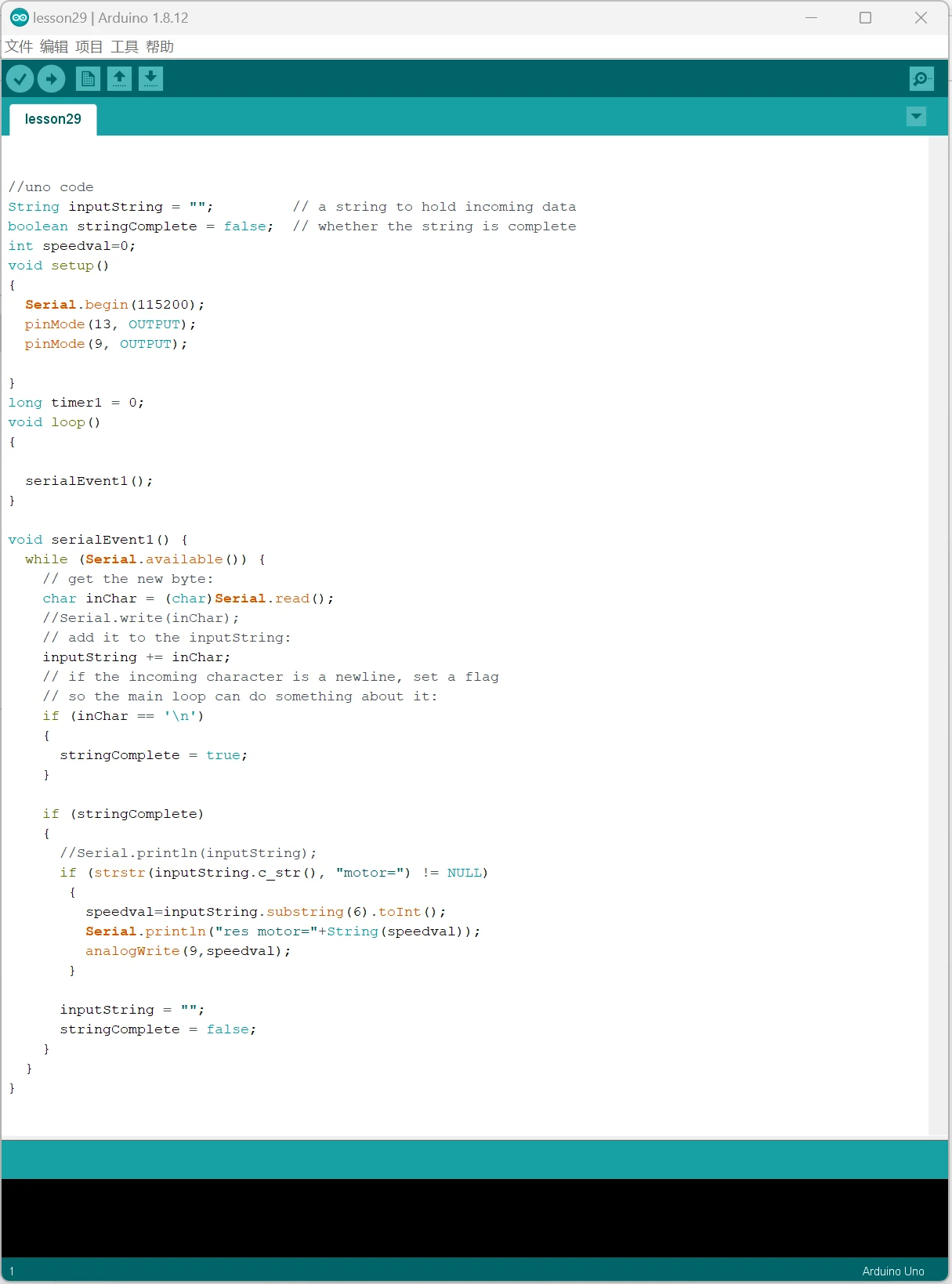
Processing presents the question interface and sends each selection to an Arduino Uno. The Arduino controls a 12V water pump through the driver circuit, changing the pump response according to the selected question. Digital input is therefore translated into a physical quantity of water.
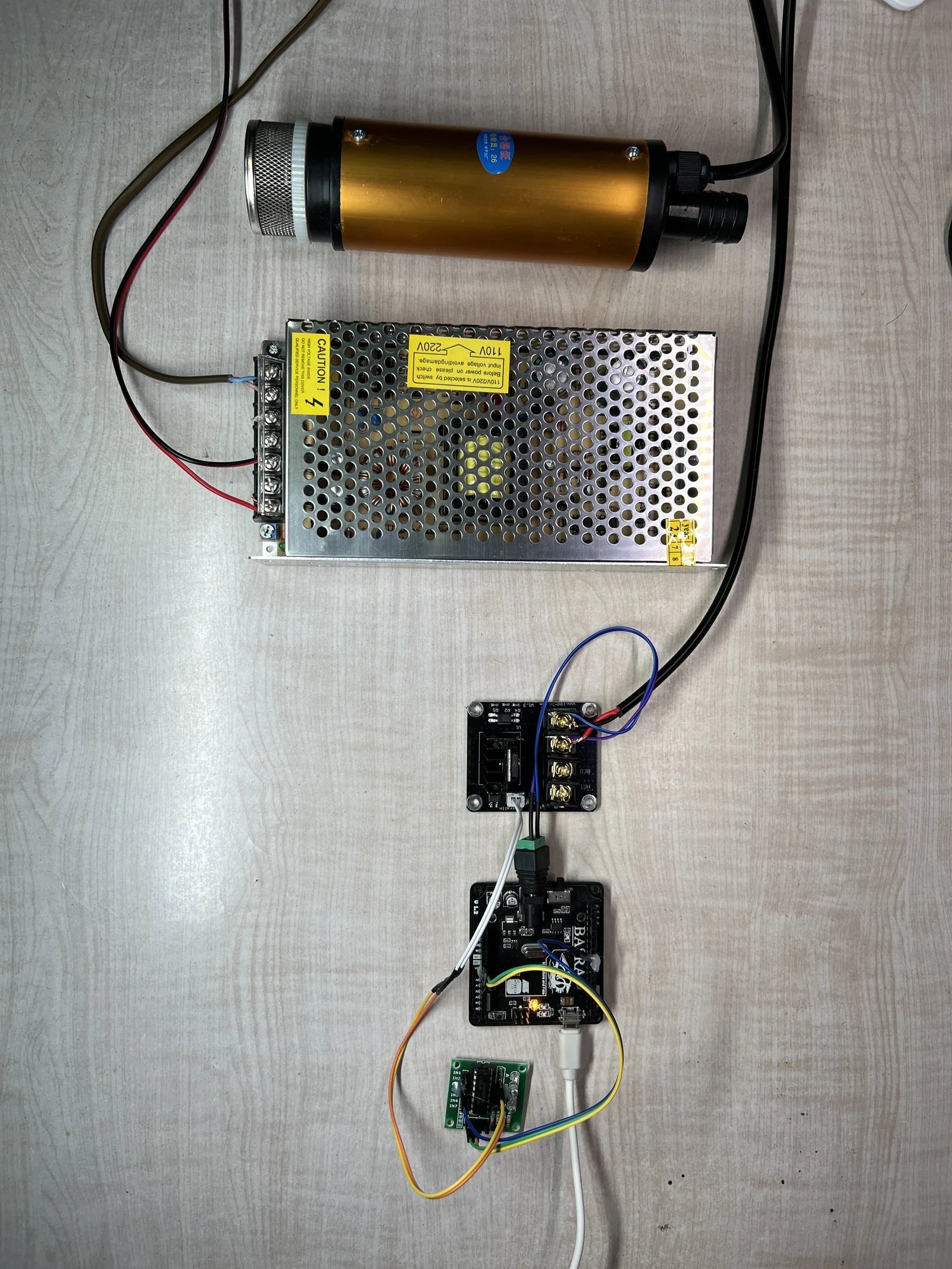
- 01Choose a question
- 02Processing sends the input
- 03Arduino controls the pump
- 04Water makes the response visible
PROCESS 05
MOVING IMAGES
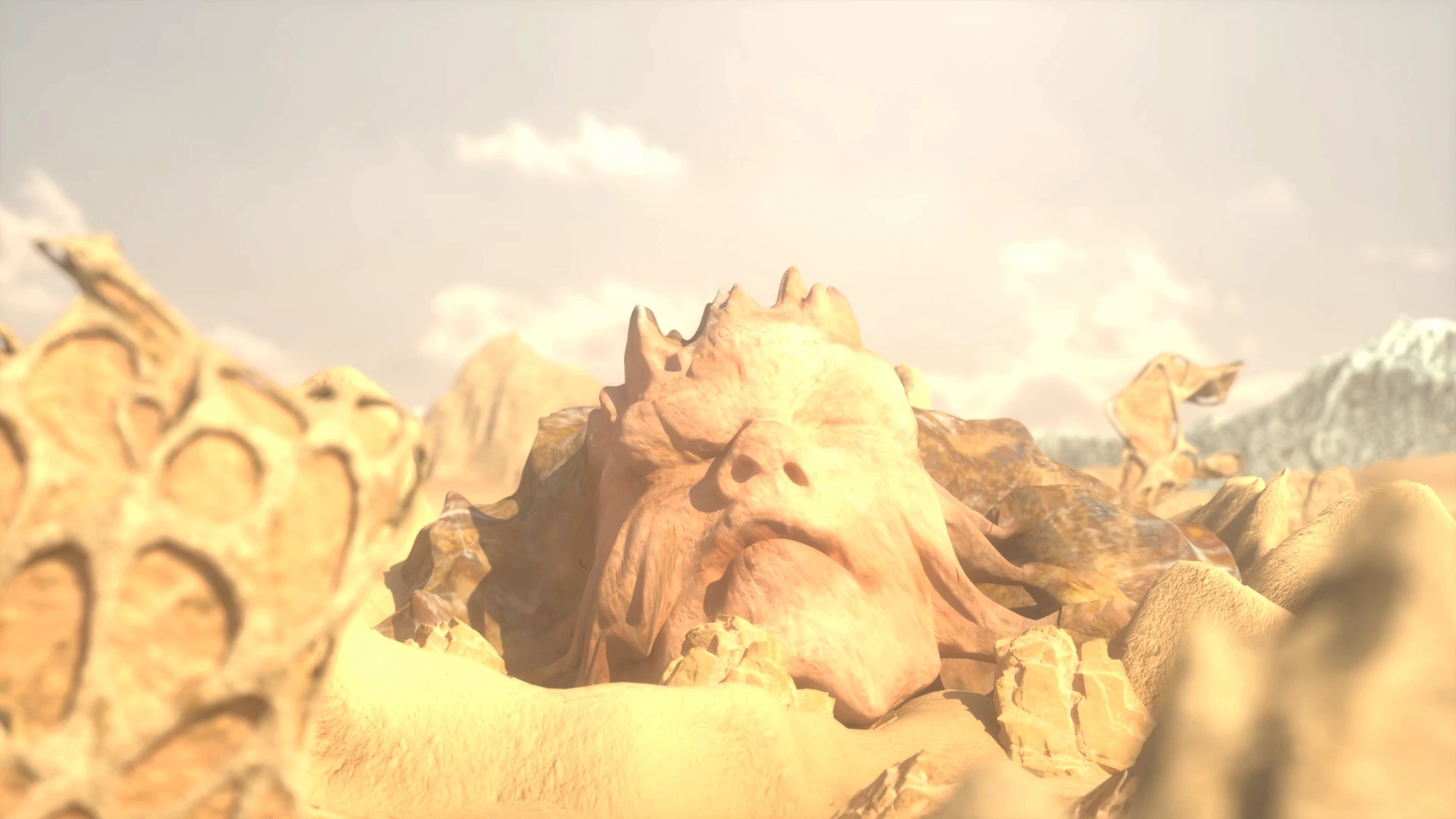
Two small displays extend the installation beyond its physical structure. AI-generated images combine human–machine conversations, river systems, circuit boards and imagined technological landscapes. The resulting animations frame AI, people and nature as parts of the same unstable system.
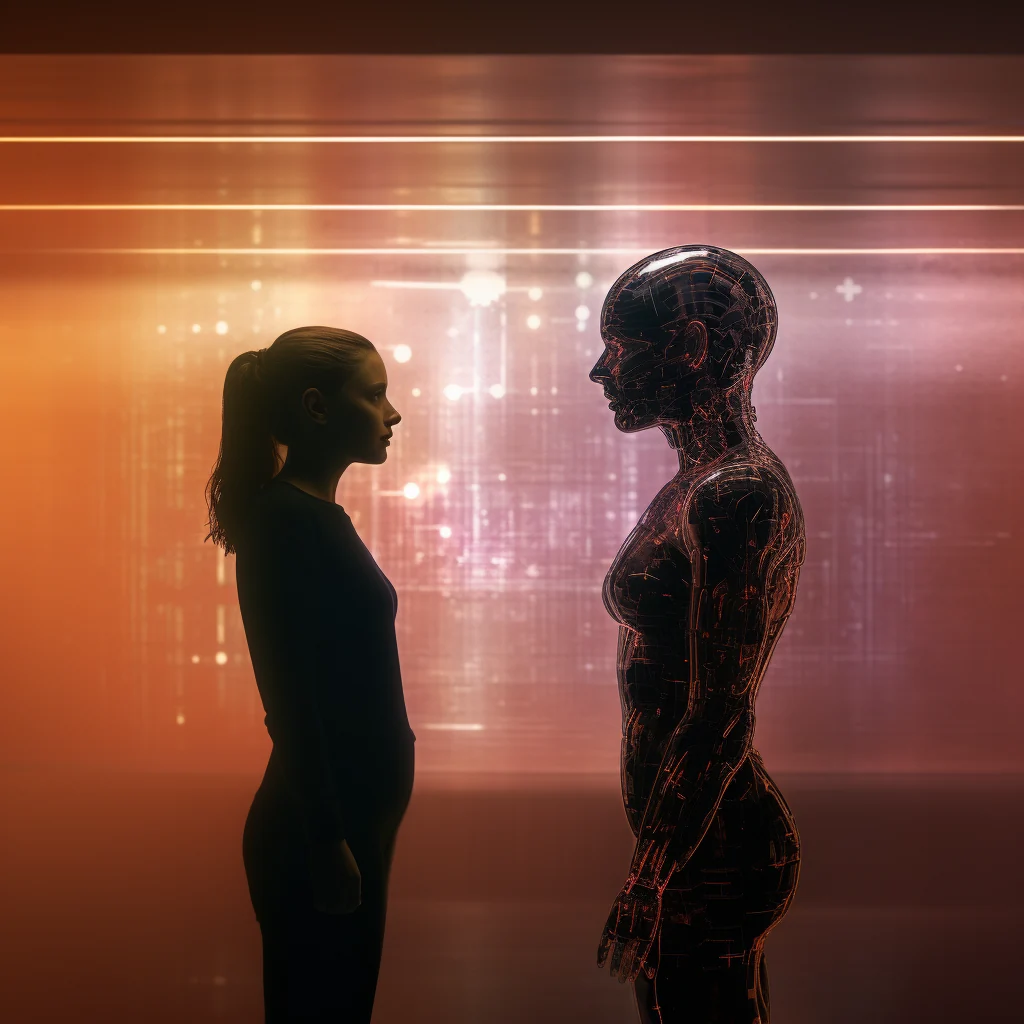
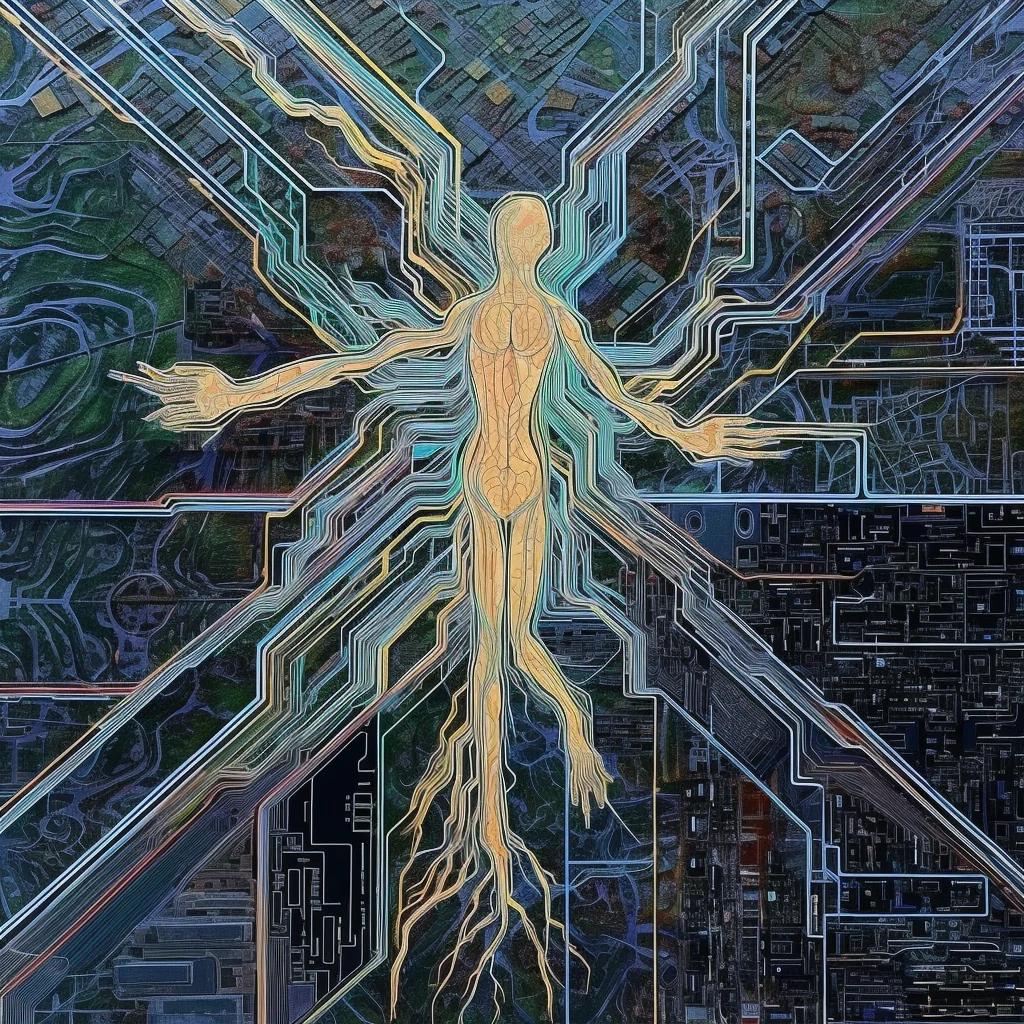
The image archive was developed into short moving sequences for two seven-inch displays embedded in the installation.
CONCLUSION
A DIGITAL QUESTION, A PHYSICAL CONSEQUENCE
AI often appears weightless: a question enters a screen and an answer returns almost instantly. AI Shower interrupts that illusion. By connecting every choice to pumps, cables, sound and falling water, the installation gives computation a body—and makes its environmental consequences harder to overlook.